

News
Latest from PTSC
Patents, partnerships and performance milestones
Updates
Company news
2026
May 2026
March 2026
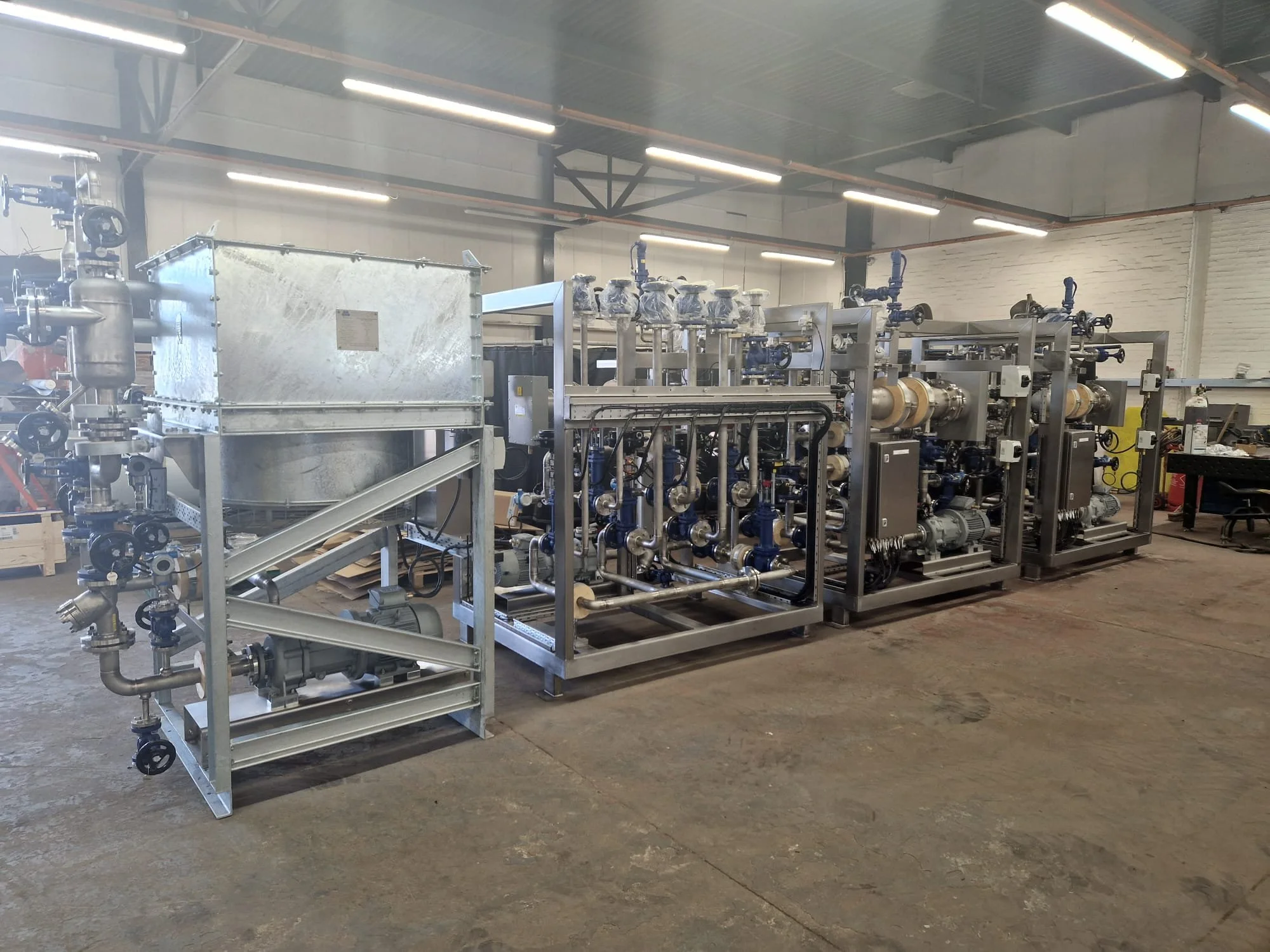
Pharma thermal fluid system project
PTSC has shipped the final modular packages for its latest fully electric pharma thermal fluid system: the complete design and build of a fully integrated multi reactor/NFD layout, with a design operating temperature range of -29 to +160 °C.
The system comprises:
Three thermal control units with electric heaters
Air cooler
Chiller
Cryogenic chiller
The project reflects PTSC's commitment to fully electric, energy-efficient engineering for the pharmaceutical industry, with a strong focus on precision temperature control, system integration and sustainability.

PTSC at CHEMUK 2026
PTSC will attend CHEMUK 2026 at the Birmingham NEC on 20 and 21 May, exhibiting on the same stand as sister company Thermal Fluid Systems. Come and meet the team, learn about what we offer and discuss how we can support your projects.


2025
August 2025
June 2025
May 2025
April 2025
March 2025
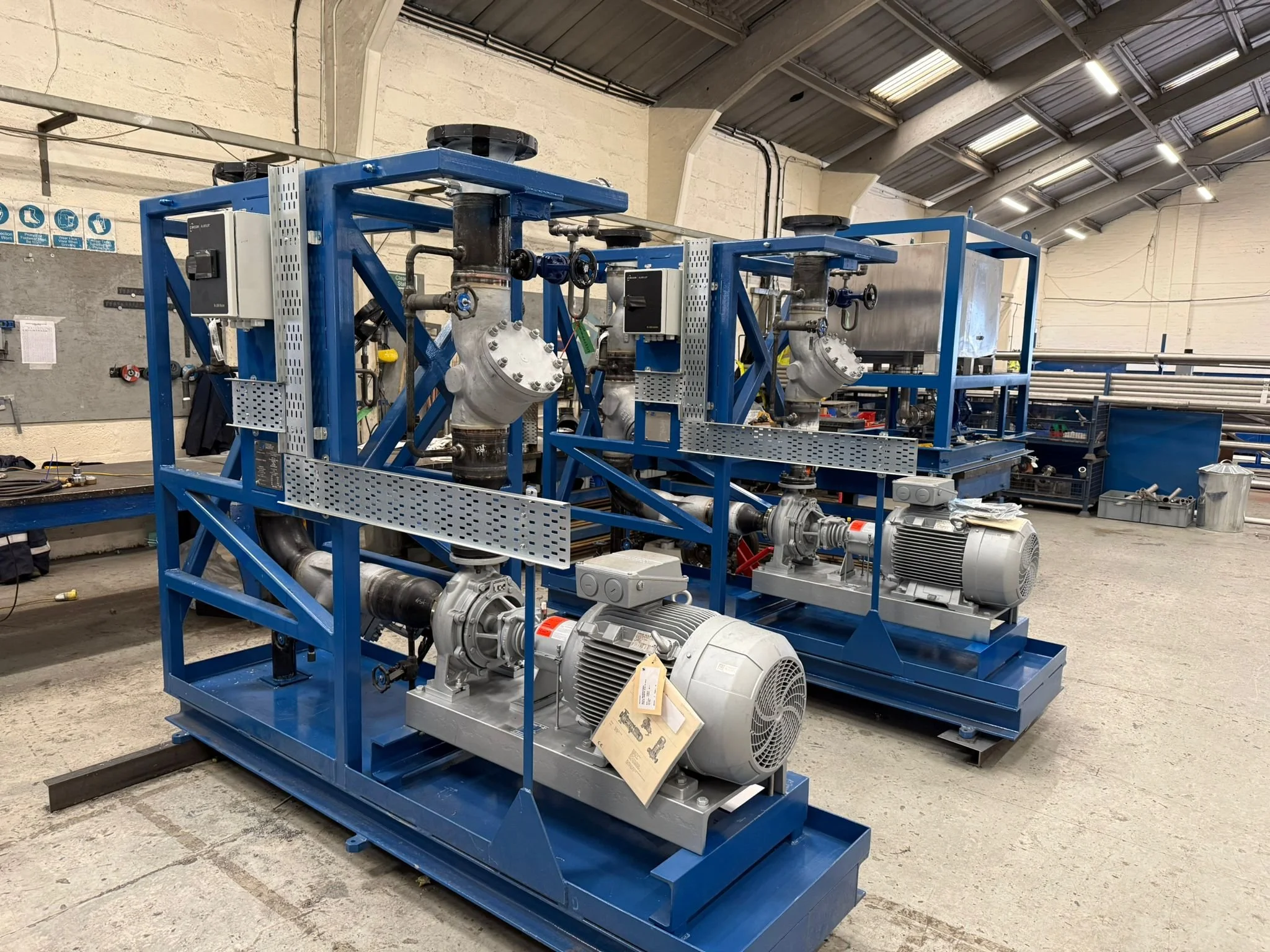
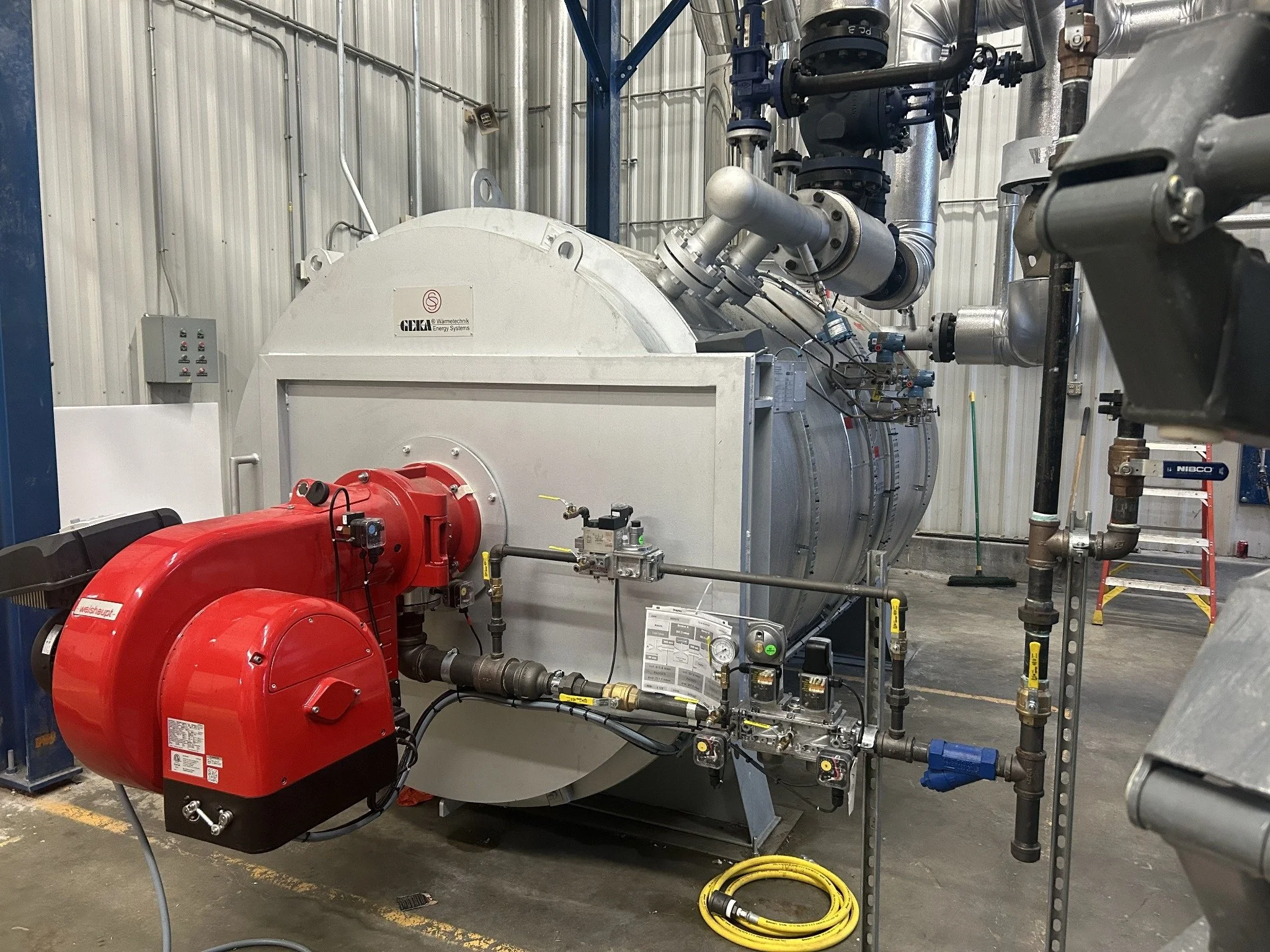
High-temperature autoclave thermal process system, USA
PTSC has delivered a 1.7 MW high-temperature thermal fluid system for a major autoclave installation in the United States, completed in August 2025. It supports one of the world's largest high-pressure autoclaves, providing precise and reliable thermal control for a specialist polymer manufacturing process.
Designed, supplied and commissioned within an 18-month programme, the project required full compliance with ASME and UL standards and successful management of complex transatlantic logistics. The system operates up to 300 °C and 10 barg and achieved the required performance from start-up.
The article below gives more detail on the project.
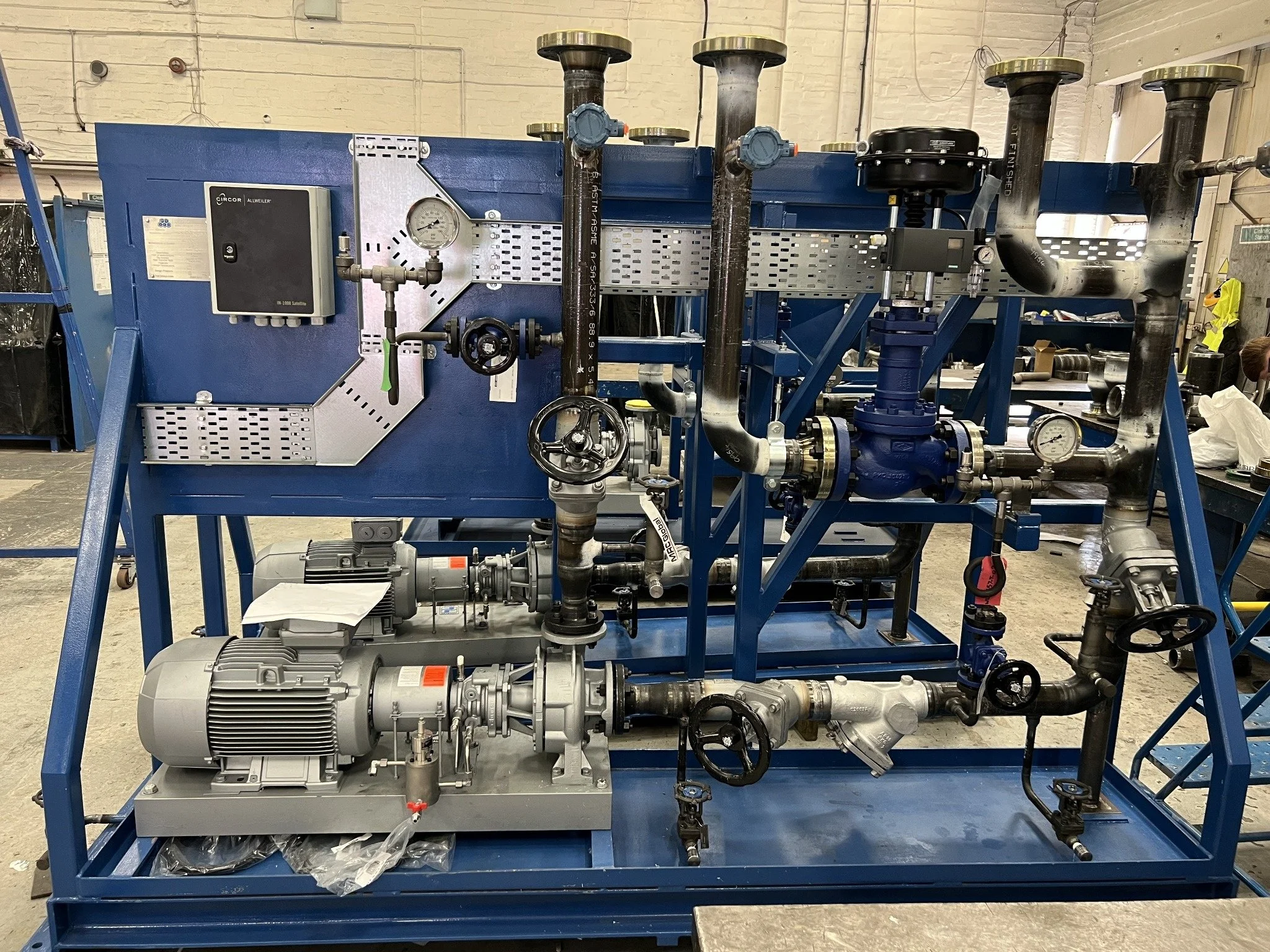
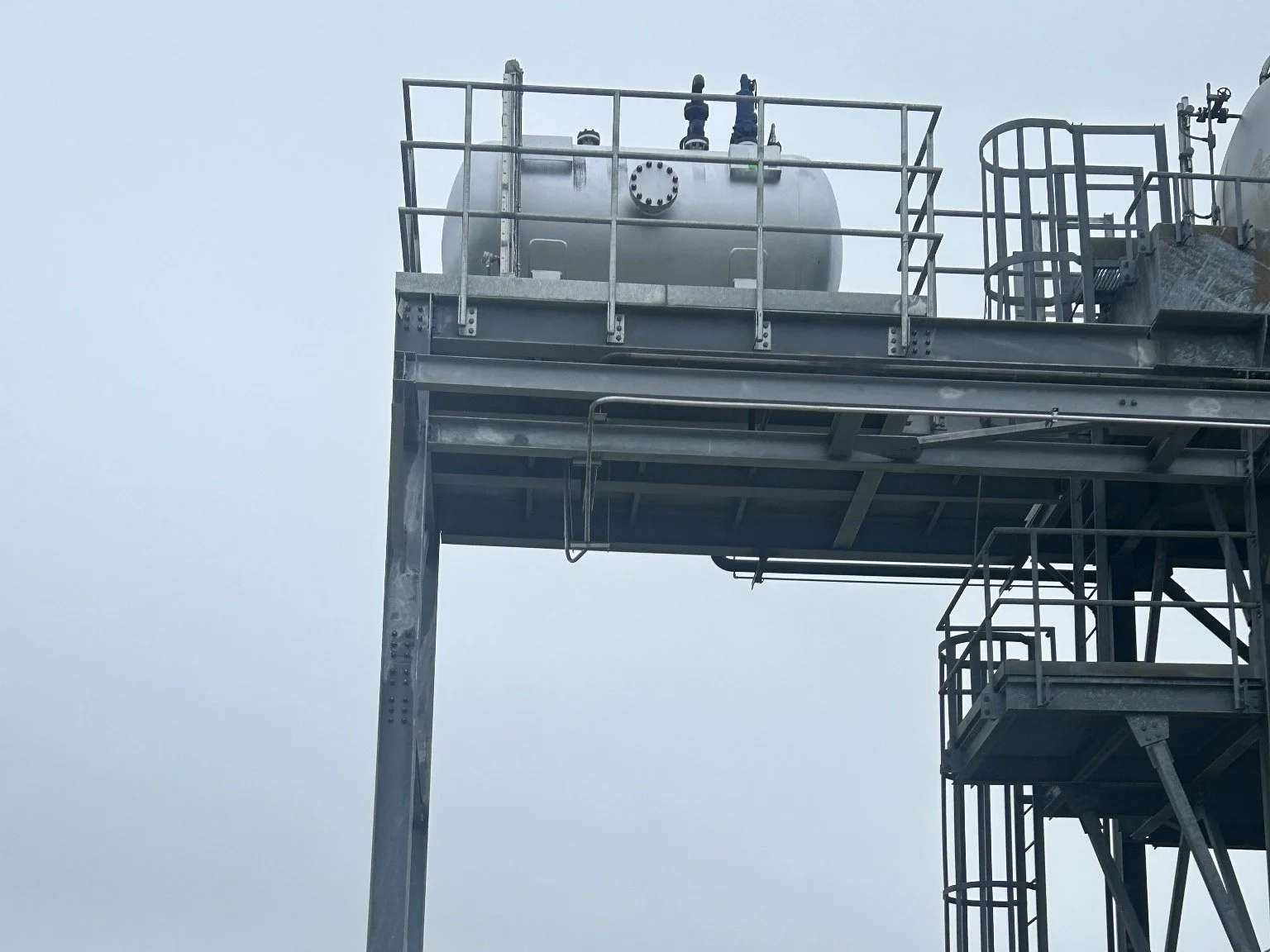
Accelerating chemical process and production with fast batch reactor technology
Following a successful presentation by Ben Deadman at ChemUK 2025, the presentation is now available on demand. Complete the form to access it.
White Paper 3: Hydrolysis of Acetic Anhydride in a Fast-Batch Reactor Operating in Semi-Batch Mode
The third white paper in Dr. Benjamin Deadman's series examines how the PI QFlux fast-batch reactor controls exothermic reactions under semi-batch conditions.
Using the hydrolysis of acetic anhydride, it shows how the PI QFlux's superior cooling gives tighter temperature control and 62% faster dosing than conventional systems, boosting efficiency and safety for challenging processes and paving the way for future work on selectivity and complex chemistries.
White Paper 2: Performance of Heated Reactions in Fast-Batch Reactors
The second white paper in Dr. Benjamin Deadman's series focuses on the performance of the PI QFlux, a major leap forward in thermal efficiency for batch processing.
Building on the first paper, which showed the reactor heating faster than conventional systems, it explores how that advantage translates into significantly shorter reaction times for bimolecular processes. It shows where the PI QFlux gives the greatest productivity gains and lays the groundwork for studies of more complex, exothermic reactions.
White Paper 1: Simulating Dynamic Thermal Conditions in Fast-Batch Reactors
The first in a series of white papers by Dr. Benjamin J. Deadman on the PI QFlux system, a major advance in fast-batch reactor technology. It highlights the superior thermal performance that improves productivity and selectivity in chemical processing.
To support it, ReactorPy, a Python-based modelling tool, was developed to simulate dynamic thermal conditions for precise control and optimisation of reactor performance. Future papers will go deeper into reaction kinetics and volume modifications.

2024
December 2024
October 2024
August 2024
March 2024
Heat Transfer Society webinar presentation
PTSC and the Heat Transfer Society will host a webinar on 29 November at 12:00 GMT introducing the PI QFlux reactor technology, which can deliver a 300% increase in heat transfer efficiency and productivity in chemical batch reactors.
Highlights:
Enhanced heat transfer mechanisms: the technology behind the PI QFlux and how it reaches such heat transfer rates
Broad industry applications: potential uses across sectors aiming to improve efficiency and sustainability
April 2024
March 2024
Heat Transfer Society webinar presentation
Following a successful webinar with the Heat Transfer Society, the presentation is now available to view on demand.

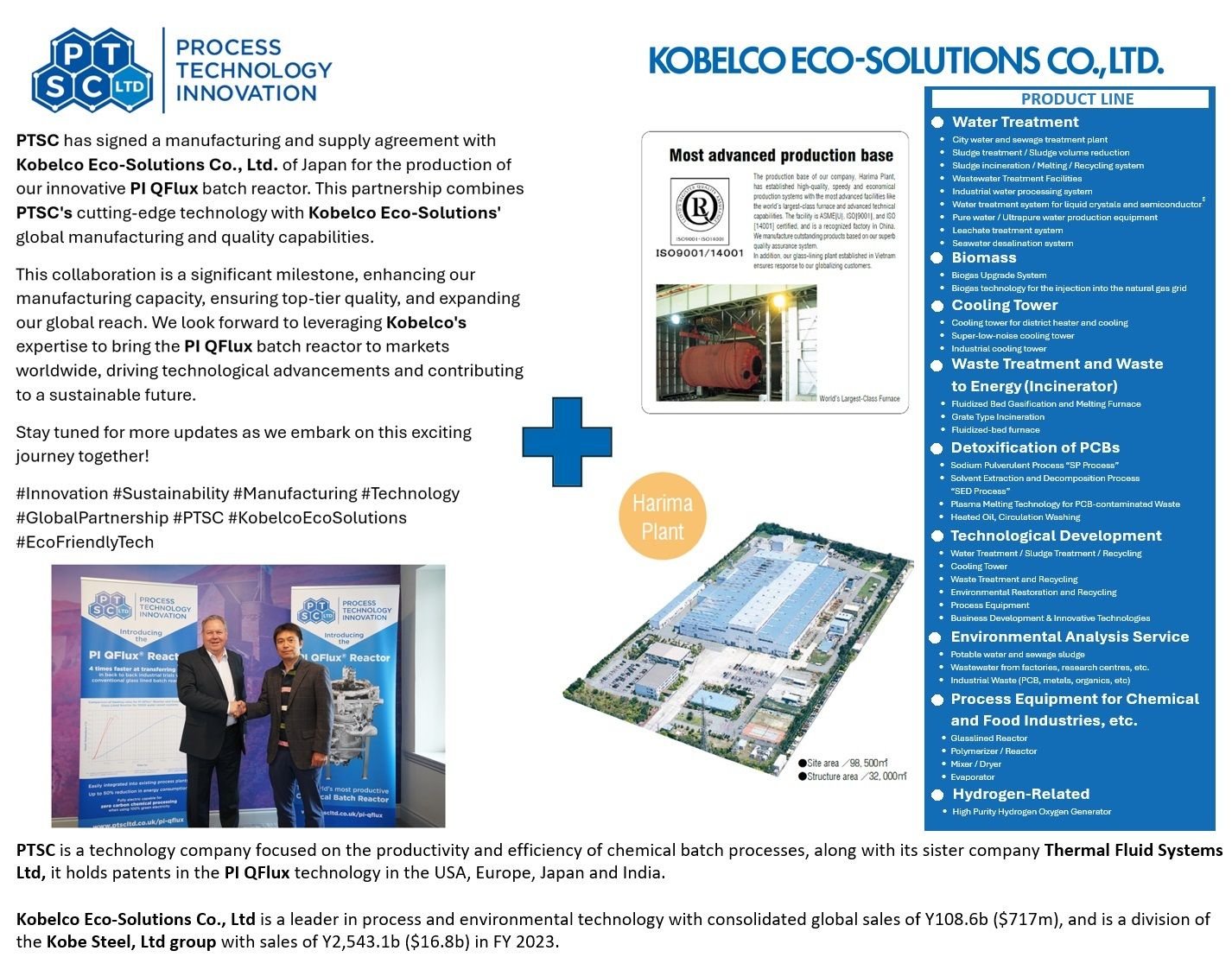
PTSC and Kobelco Eco Solutions partnership
PTSC has finalised a manufacturing supply agreement with Kobelco Eco Solutions Co., Ltd of Japan for the PI QFlux batch reactor, a significant milestone for innovation in chemical manufacturing and for process technology and sustainability.
PTSC granted European patent for the PI QFlux
The PI QFlux chemical batch reactor has been granted a European patent, adding to the existing US and Indian patents. Filings are still pending in Japan and China.
The grant validates the uniqueness of the technology and its title as the world's most productive batch reactor.

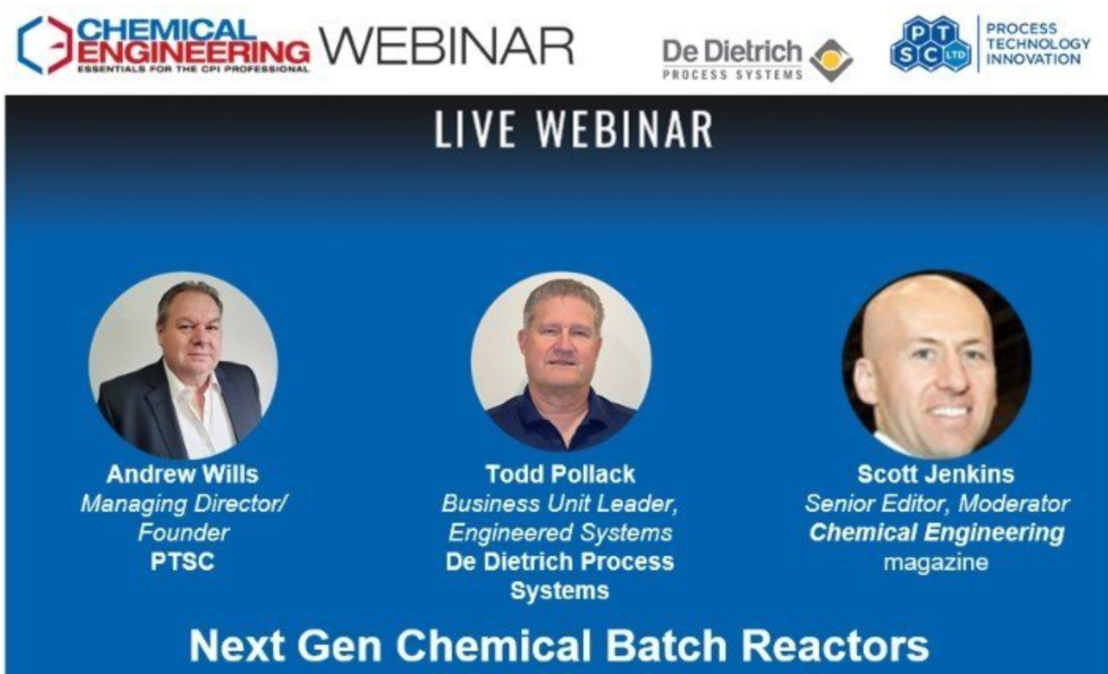
PI QFlux webinar now available on demand
Following the successful live webinar with De Dietrich Process Systems North America, the webinar can now be watched on demand. Complete the form to access the presentation.

Webinar: optimised throughput batch reactor technology
The chemical industry has relied on the same traditional batch reactor technology for decades, with little change. This webinar explains how the new “optimised throughput” technology can improve productivity, quality and energy efficiency at production scale, especially in fine and specialty chemicals.
What you will learn: how to overturn long-held assumptions about what batch reactor production systems can do.
Who should attend: anyone who wants a substantial improvement in chemistry output through a technology change, without moving to a radical process change such as flow chemistry.

2023
December 2023
De Dietrich Process Systems and PTSC launch the PI QFlux in North America
PTSC has signed a Memorandum of Understanding with DDPS US while both parties develop a licensing agreement for the marketing, distribution and manufacture of the PI QFlux batch reactor system in North America. PTSC holds the US patent and keeps all IP and technology ownership.
DDPS US brings systems design, integration and manufacturing expertise, combined with PTSC's design of batch reactor and thermal fluid control packages, to provide locally based advanced batch reactor systems.
The PI QFlux offers up to five times higher heat transfer performance and 50% energy savings over conventional batch reactors.
Don Doell, CEO of DDPS US, said the product reflects a shared commitment to innovation, sustainability and efficiency, and expects it to be a game-changer in chemical and pharmaceutical applications. Andrew Wills, Managing Director and Founder of PTSC, said the precise heat flux gives far better batch controllability and bulk scalability, with up to four times the throughput in space time yield.
2022
November 2022
October 2022
September 2022
July 2022
Chemical Engineering Online features the PI QFlux again
Chemical Engineering Online ran another feature on the PI QFlux reactor, under the headline “This batch reactor saves time, energy, space and more”.
Heat Exchanger World takes a deep dive into the PI QFlux
Heat Exchanger World Magazine published a detailed look at the PI QFlux in its October edition.
US Patent Office issues PTSC a patent for the PI QFlux Reactor
The US Patent Office has issued PTSC Ltd the patent for the PI QFlux Reactor. Patents have also been applied for in Europe, India, China and Japan.
To reach a heat flux four times greater than conventional glass-lined reactors, the PI QFlux uses many innovations, from incremental to radical, so protecting them by patent is a major milestone.

PI QFlux industrial scale performance testing complete
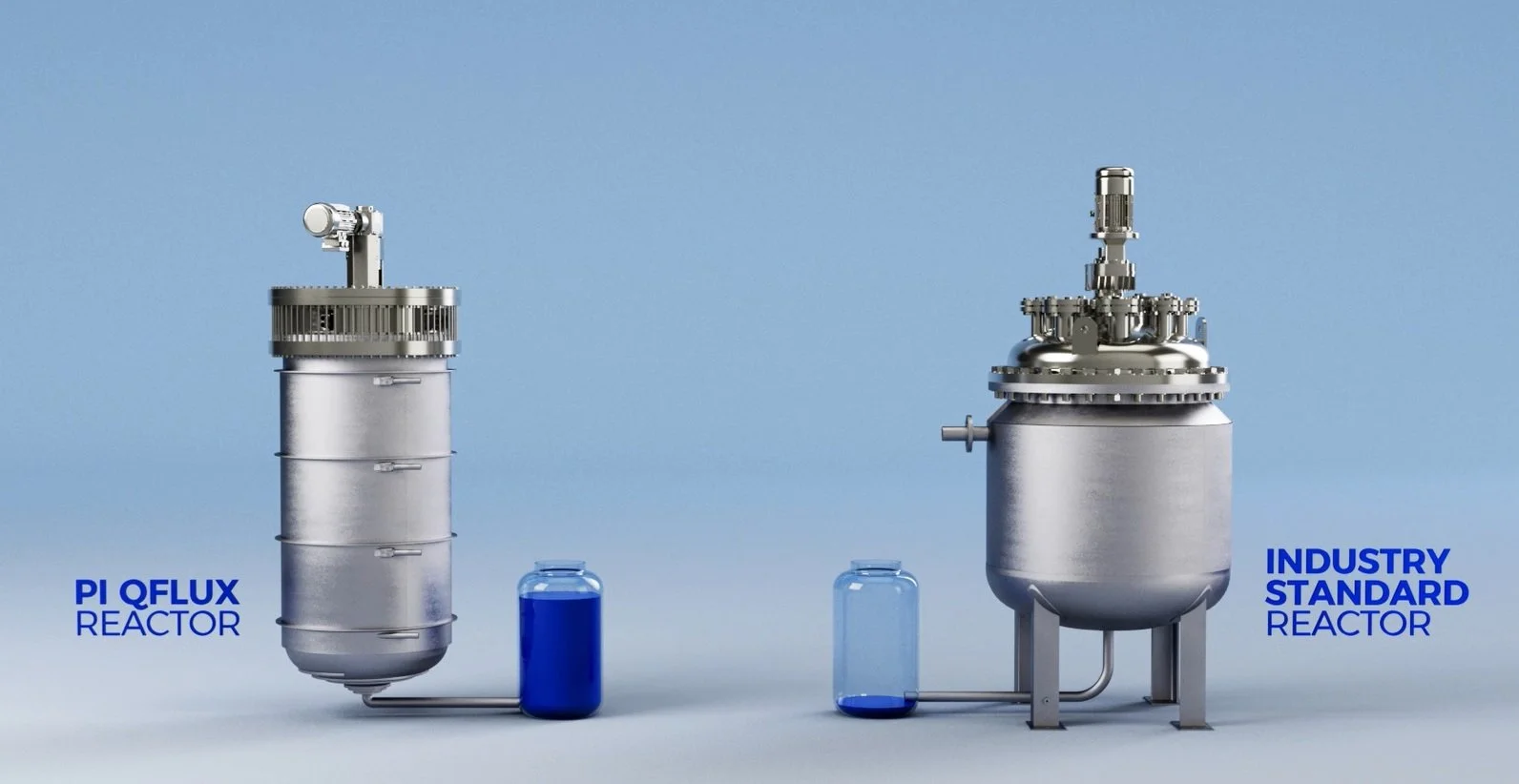
PTSC carried out extensive testing of the PI QFlux batch reactor against an equivalent-sized traditional batch reactor. Both were built in glass-lined steel and ran on the same service connections.
Within one day of testing starting, and continuously afterwards, the PI QFlux achieved a heating and cooling rate four times higher than the conventional reactor, thanks to its unique design and its PTSC/TFS-designed TCU. The design also cut primary heat energy consumption by up to 50%.
Kobelco Eco Solutions Japan supported the test, constructing the test centre and providing all the process infrastructure for the full-scale production trial.

May 2022
PTSC introduces the PI QFlux batch reactor concept
2021
September 2021
August 2021
January 2021
PTSC and Kobelco Eco Solutions begin full-scale trials
PTSC and Kobelco Eco Solutions Co Ltd of Japan are collaborating on the first full-scale trials of the new PI Reactor and the Single Phase Parallel Flux TCU developed by PTSC and protected by patents.
This next-generation batch reactor is expected to raise the productivity and performance of both alloy and glass-lined reactors while reducing energy use. The trials will take place at a purpose-built test centre being constructed near Kobe, Japan, where the PI Reactor and TCU will be matched against a traditional reactor of the same volume in the first half of 2022.

Thermal Fluid Systems Ltd becomes a full affiliate of PTSC
Thermal Fluid Systems Ltd, specialists in the design and provision of thermal fluid control systems, becomes a full affiliate of PTSC under a change of shareholder ownership.
Thermal Fluid Systems is the UK's leader in the design, manufacture and installation of single fluid thermal control packages, with over 35 years of experience and more than 500 installations. Its international client list and proven design IP will support the future developments of both companies as they work to decarbonise the chemical and industrial sectors.
PTSC agrees to support Apaco AG equipment in the UK and Ireland
PTSC has entered into an agreement with Apaco AG, Swiss-made energy systems including the former team of Bertrams Heatec, to support the installed base of equipment in the UK and Ireland, as part of the long-running agreements between Bertrams Heatec and Thermal Fluid Systems Ltd.
Examples of installed equipment:
3 x 10,500 kW
2 x 3,755 kW
3 x 10,250 kW